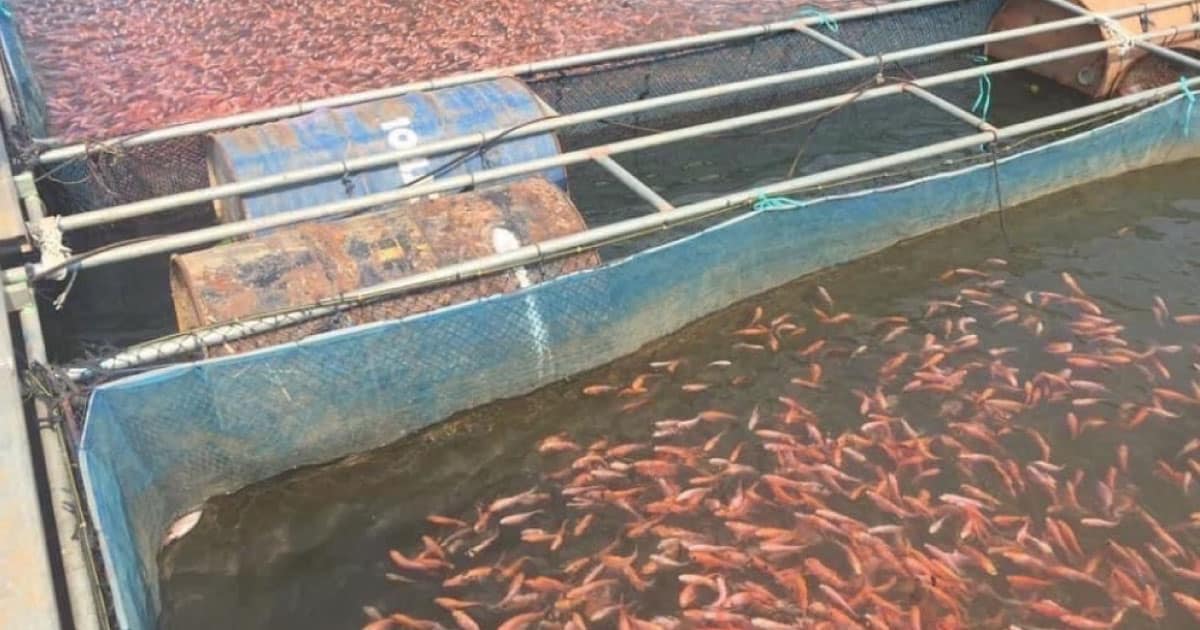
A听lecturer and his research team from the Faculty of Veterinary Science at 麻豆国产 have developed 鈥淔lavo Innovac鈥� nano-vaccine for the prevention of bacterial gills diseases in freshwater fish species, such as Tilapia and freshwater Asian sea bass. This nano-vaccine is an effective solution that reduces the risk of death from diseases and avoids the limitations of vaccine injections.
Tilapia and Asian sea bass are the economically important fish species in the market but raising them to be healthy is a painstaking task, especially when faced with the possibility of disease outbreaks such as infections from Flavobacterium commonly found in raising water environments.
The problem worsens with the over-crowding of fish in ponds and other risk factors that promotes the spread of bacteria resulting in gills disease. The disease can cause massive mortality of fish.
For this reason, Associate Professor Dr Channarong Rodkhum has formed a collaborative effort with a research team from the Center of Excellence in Fish Infectious Diseases (CE FID) and Aqua Innovac Co. Ltd. to develop 鈥淔LAVO INNOVAC鈥� the world鈥檚 first inactivated Flavobacterium nanovaccine.
鈥淣辞谤尘补濒濒测听fish farming听or aquatic industries do experience diseases and infections. Overcrowding, bad environments and water quality, increase of organic substances or changes in water temperatures can weaken the fish making them susceptible to diseases. Flavobacterium spp. is the causative agent that attacks fish and causes gills and skin infections leading to as high as up to 100 % mortality rates, especially among the juvenile stage of fish that are still weak and cannot specifically protect themselves from Flavobacterium spp. infections. This can be prevented by administering a vaccine for these fish.鈥� Channarong Rodkhum explained.
鈥�
Why Needle-Free Vaccinations? 听
When people think of vaccines, they immediately think of needles or injections. Vaccine injection in fish is, however, different from humans in terms of the process, expenses, limitations, and the risk of using needles. 听
Channarong enumerated more on the process saying 鈥淲e aren鈥檛 able to inject a fish directly as it will start moving which causes fish stress. Injecting a fish means, therefore, that the fish first needs to be made unconscious by way of soaking it in a sedative agent for a while, after that fish will be injected one by one by an expert. The process also involves transferring the vaccinated fish into the pond. All of this increases the costs and labour consumed.鈥�
鈥淰accine injection in fish also involves the risk of infections at injection sites. Another limitation is that we are unable to inject very small fish.鈥�
Therefore, the needle鈥揻ree AQUA INNOVAC is an alternative to injections with needles. It can effectively stimulate the specific immune responses of the fish at a lower cost and enable vaccination of a mass population of fish at one time (up to many thousands or millions).
鈥淔ish farmers can prepare FLAVO INNOVAC vaccination easily by themselves. The fish need to be immersed in water mixed with the vaccine for approximately 20-30 min in the proportions determined on the labels. During that time, the fish need to be given oxygen for the entire time. 听After receiving the vaccine, the fish can be released into the ponds right away. 听The nano vaccine is produced from the strain of Flavobacterium spp. locally isolated here in Thailand and is therefore very effective in the prevention of diseases occurred by a local strain of Flavobacterium spp.鈥�
听
Vaccine delivery via Nanotechnology听
Aside from being Thailand鈥檚 first Flavobacterium nanovaccine for fish, 鈥淔LAVO INNOVAC鈥� is also the world鈥檚 first inactivated Flavobacterium nanovaccine against bacterial gills disease caused by Flavobacterium infection, that makes use of nanotechnology for its delivery.

![[The Nation Thailand] 鈥楴ew Human Species鈥� to Rise to Future Challenges](https://web-cdn.chula.ac.th/web-dev/2025/02/2025-PIC-NationTH-ChulaPresidentSummit.jpg)