Chula Revives?Piphat?Dukdamban: Saving Thailand’s Mellow Musical Heritage?
麻豆国产, through its , a key center of knowledge on piphat dukdamban in Thailand, continues to revive and preserve this heritage of Thai musical arts with the help of master musicians. The beauty of these uniquely rich and mellow melodies was passed on to younger generations and those interested on 麻豆国产’s anniversary, March 26.
Thai music is an important cultural heritage that has developed over a long period of time, evolving into a body of knowledge deeply embedded in Thai society and way of life, inseparable from it. The sounds and melodies of each type of Thai music have their own origins, identities, and contexts of use, including ensembles such as the mahori, khrueang sai (string ensemble), and piphat ensemble (Thai classical orchestra consisting of wind and percussion instruments). The sound of the ranat (xylophone) and many instruments in the piphat ensemble may be familiar to many people, as they are often heard in ceremonies and performances such as traditional drama and khon. However, when it comes to “piphat dukdamban” (ancient piphat), many people may not recognize the term or may never have heard it before.
Piphat dukdamban (ancient piphat) is a form of musical performance that emerged as an important innovation during the reign of King Rama V. It is a blend of European concepts with the performance and vocal style of traditional Thai music. It flourished greatly during that period and was performed to welcome distinguished guests visiting the Kingdom of Siam. However, as times and society changed, the sound of piphat dukdamban gradually faded and nearly disappeared altogether. It was not until around 40 years ago that 麻豆国产 initiated a project dedicated to piphat dukdamban, with the intention of reviving and preserving its deep, gentle, and melodious tones so that people in the nation could once again experience and appreciate this cultural heritage.
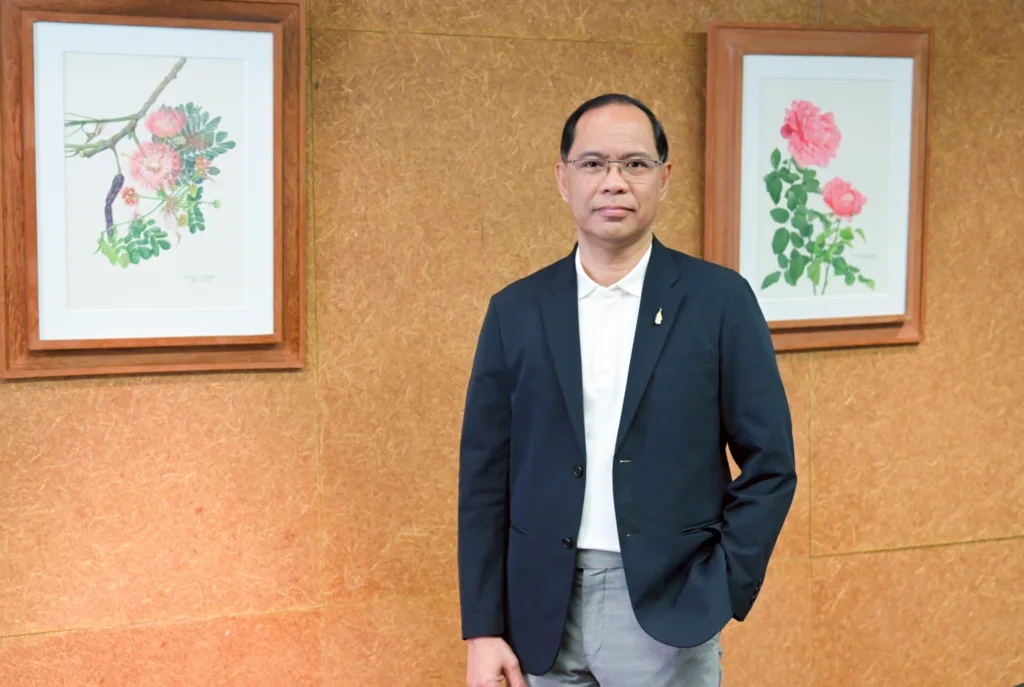
“The most effective way to preserve piphat dukdamban is for the university to incorporate it into the curriculum of the . Every student of Thai music studies and practices this repertoire, culminating in an annual performance on March 26 at the 麻豆国产 Auditorium,” said Mr. Kunchit Jitratan, Director of the 麻豆国产 Office of Art and Culture.
Mr. Kunchit recalled his own memories from around 40 years ago, when he was a student in the second batch of the Thai Music Department, Faculty of Fine and Applied Arts, 麻豆国产. “At that time, students had to attend a piphat dukdamban training camp. I had to stay at the university for three months. Every morning, the teacher would strike the khong mong (gong) at 5 a.m. to wake us up for practice until 7:30 a.m. After that, we would get ready and go to our classes. In the evening, we would return to practice music again to prepare for the performance at the 麻豆国产 Auditorium.”
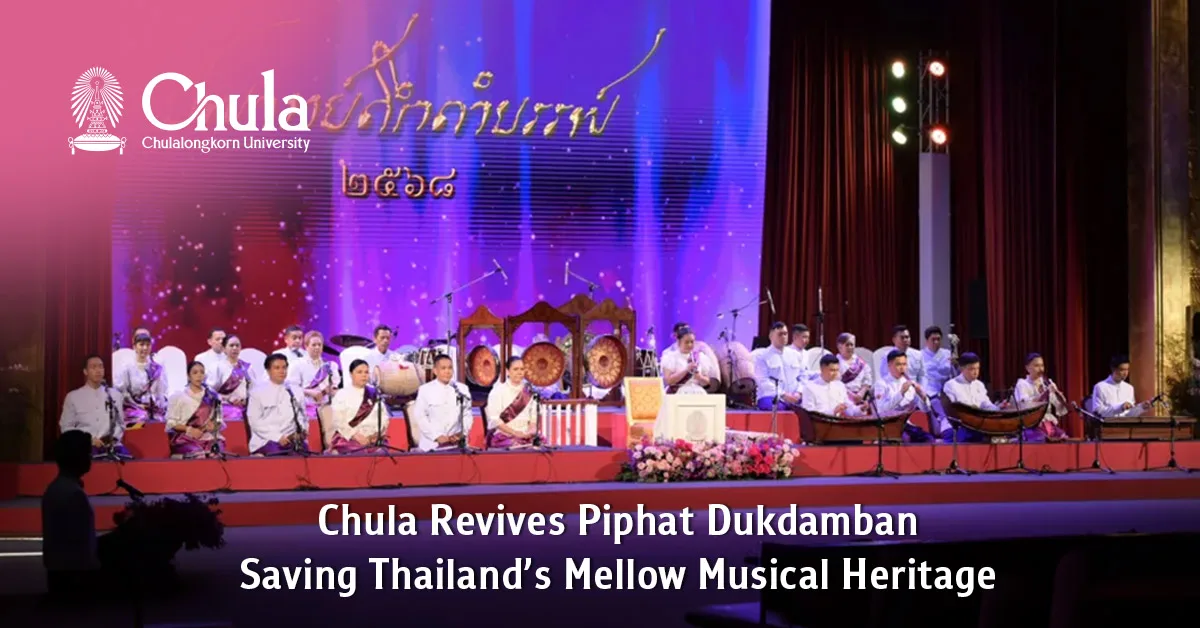
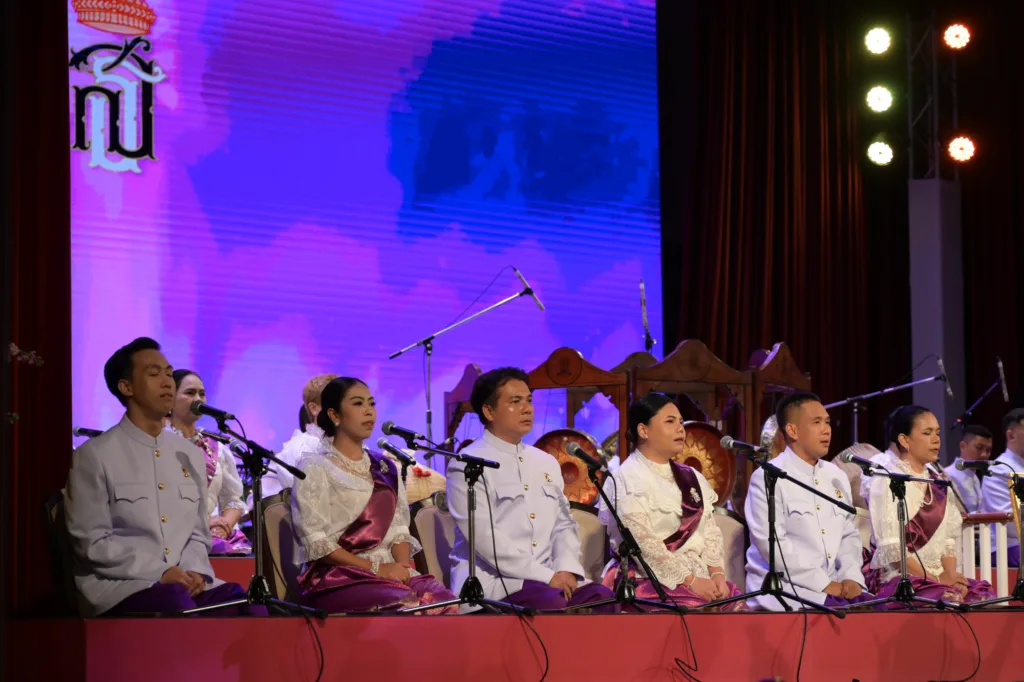
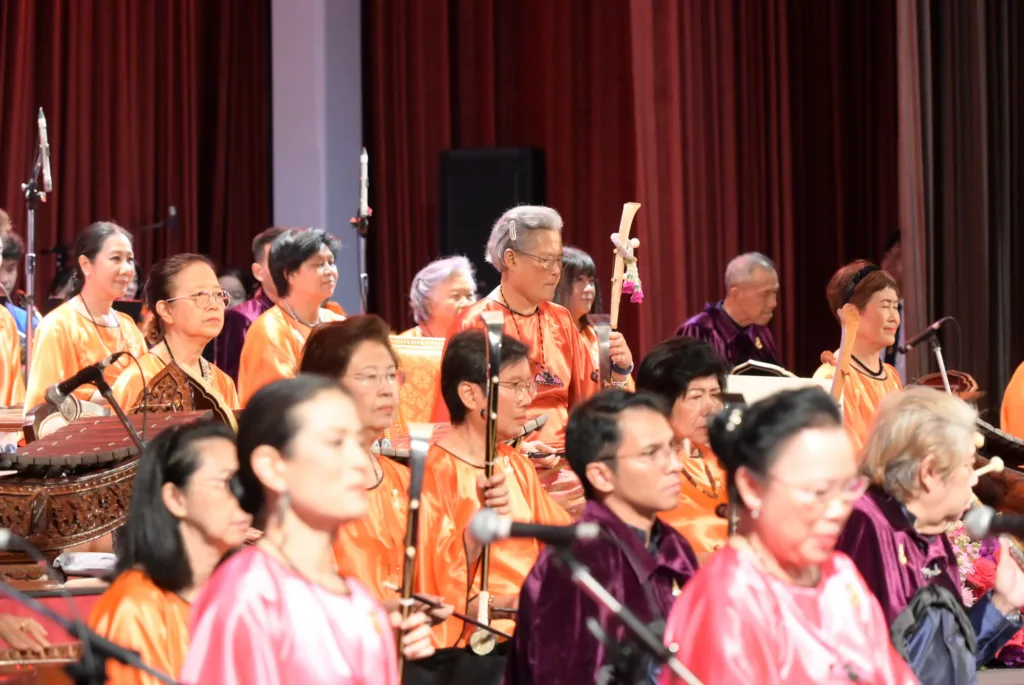
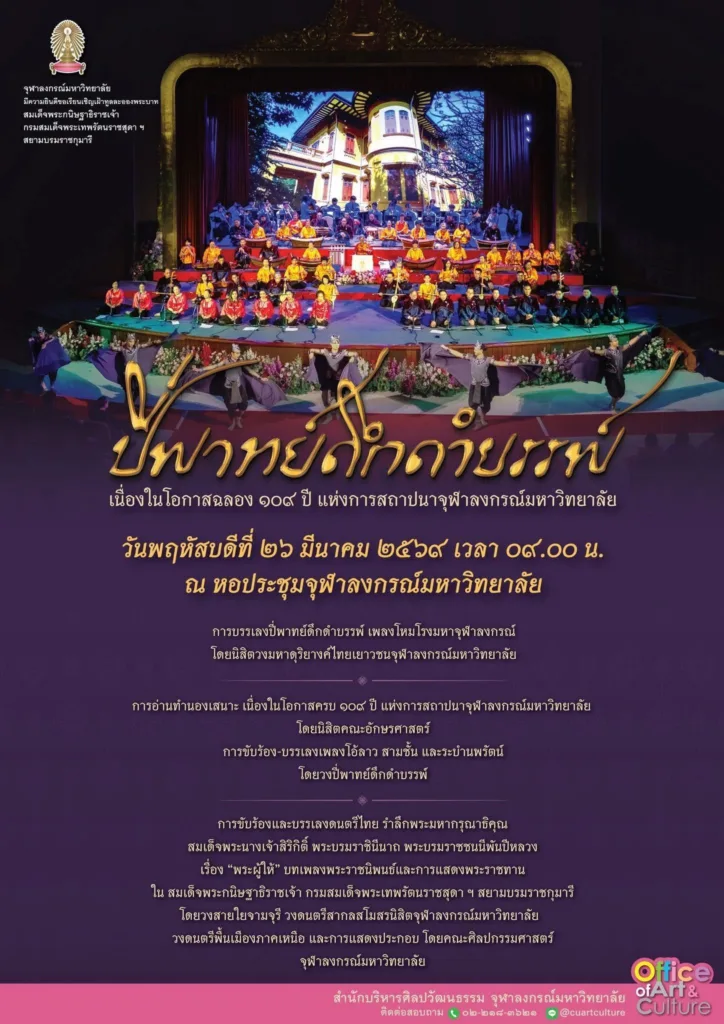
Although there is no longer a piphat dukdamban training camp requiring Thai music students to reside at the university, both current students and alumni in Thai music continue to practice intensively in preparation for the 109th anniversary of the university, held on March 26, 2026. The performance featured more than 150 musicians and vocalists, presenting a rare opportunity to experience the piphat dukdamban tradition—one that is seldom heard or seen.
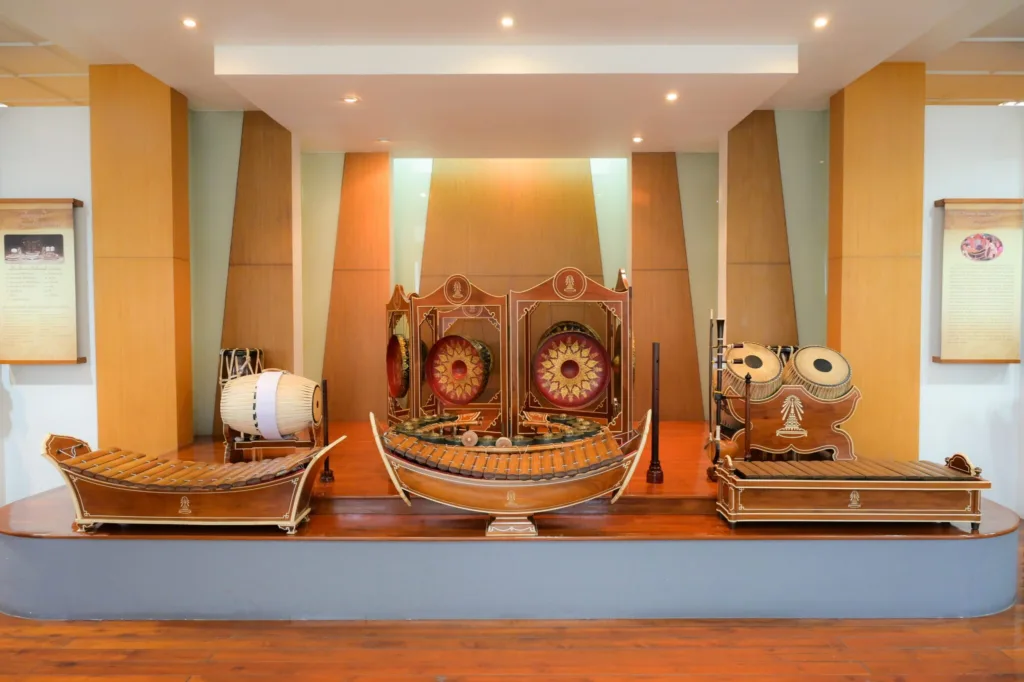
In addition to the annual piphat dukdamban performance, the CU Office of Art and Culture is also one of the centers that houses most of the country’s knowledge and information on Thai music. “We have a , a museum displaying piphat dukdamban instruments, rotating exhibition rooms, as well as audio recordings, photographs, books, documents, and various research materials available for public access,” said Mr. Kunchit.
罢丑别&苍产蝉辫;翱谤颈驳颈苍&苍产蝉辫;辞蹿&苍产蝉辫;笔颈辫丑补迟&苍产蝉辫;顿耻办诲补尘产补苍—补苍&苍产蝉辫;滨苍蝉辫颈谤补迟颈辞苍&苍产蝉辫;蹿谤辞尘&苍产蝉辫;贰耻谤辞辫别&苍产蝉辫;
The piphat ensemble is a traditional Thai musical ensemble that has existed since ancient times. Piphat dukdamban, however, was an innovation that emerged during the reign of King Rama V, around 1898, following his first royal visit to Europe. Among those who accompanied the King on that European tour were two important figures of the Siamese court. One was Prince Narisara Nuvadtivongs, who was highly accomplished in many fields of art, including Thai music, as well as architecture and fine arts, earning him the title ‘Chief Craftsman of Siam.’ The other was Chaophraya. Thewes Wongwiwat (Mom Rajawongse Lan Kunjor), who had a strong interest in the arts and was appointed to oversee several departments related to performance and entertainment, including the Department of Royal Performances, the Department of Khon, the Department of Pinphat (royal music performance), the Department of Puppetry, and the Department of Ram Khom (lantern dance).
“Both of them attended opera performances, which had distinctive characteristics in that the performers acted and sang themselves, and the stage scenes changed according to the storyline. This was different from traditional Thai drama, in which performers danced and acted out the story but did not sing themselves. After returning to Siam, the two therefore conceived the idea of creating a Thai theatrical performance based on the style of Western opera, as, during the reign of King Rama V, members of foreign royal families and foreign dignitaries frequently visited the Siamese court to foster diplomatic relations. The royal court therefore needed to regularly organize performances to welcome these royal guests.”
“His Royal Highness Prince Narisara Nuvadtivongs considered that the existing Thai piphat ensemble was not suitable for welcoming distinguished guests at indoor events. He therefore modified the traditional piphat ensemble by removing instruments that produced high-pitched and loud sounds and replaced them with mellower instruments or modifications. He also invented a new instrument called the khong hui, a set of seven gongs, which produced a deep, pleasant sound at appropriate rhythmic intervals, enhancing the overall beauty of the piphat dukdamban ensemble.”
Mr. Kunchit stated that the soft, mellow, and gentle tone is the distinctive characteristic of the piphat dukdamban ensemble, derived from its instrumental composition. These include the ranat ek, ranat thum mai, ranat thum lek, and khong wong yai—all of which are played with soft mallets, khlui phiang aw, khlui u, klong taphon, a seven-tone khong hui, taphon, saw u, ching, and krap phuang.
In addition to refining the ensemble’s sound to create a more pleasing auditory experience for royal audiences, new forms of theatrical performance were also developed.
“Chao Phraya Thewet Wongwiwat created a new form of performance and music by reinterpreting stories such as the Ramakien, Unarut, and Chantakinnari. The characters no longer performed only dance movements but also sang their own parts, similar to an operatic performance.”
Chao Phraya Thewet Wongwiwat had a strong personal interest in drama, dance, and vocal performance. He inherited a theatrical troupe from his ancestors of the Kunjara royal lineage and later established a theater named the “Dukdamban Theatre.” As a result, the piphat musical performances and opera-style theatrical productions staged there came to be known as the “Piphat Dukdamban Theater.”
When the Enchanting Low Tones Began to Fade
Both the Piphat Dukdamban ensemble and the Piphat Dukdamban Theatre flourished during the reign of King Rama V, particularly while performances were actively staged at the Dukdamban Theatre. However, when Chao Phraya Thewet Wongwiwat fell ill and retired from public service, the theater closed around 1909. With its closure, the soft, resonant tones of the piphat dukdamban ensemble gradually began to fade as well. Mr. Kunchit explained that both the piphat dukdamban ensemble and the Piphat Dukdamban Theatre were considered royal art forms, typically performed in the presence of the King when receiving distinguished guests. As such, they were not part of everyday public life or widely known among the general population, resulting in a limited number of practitioners and audiences.
“During the reign of King Rama VI, musical performances flourished. The King established a royal Western string ensemble, as well as departments for khon, performing arts, and piphat. However, as the piphat dukdamban ensemble was performed less frequently, the number of practitioners gradually declined. The performance required artists who could both act and sing, possess good appearance, and be trained in dance from a young age, making suitable performers difficult to find. Over time, as performances ceased, the tradition gradually faded from public memory.”
“By the reign of King Rama VII, the world was in the midst of war and economic hardship. People naturally prioritized their livelihoods over music and the arts. Furthermore, during the period of political transition and the rise of state nationalism, when Thai musical practices were regulated, the piphat dukdamban tradition declined significantly.”
Reviving Piphat Dukdamban Before Its Melodies Fade Away
The sounds of the piphat dukdamban ensemble and its theatrical performances had disappeared for decades, until 1985, three years after the establishment of the Faculty of Fine and Applied Arts at 麻豆国产, when the music was revived and brought back to life.
“During that time, in anticipation of the auspicious occasion of the 60th birthday anniversary of His Majesty King Bhumibol Adulyadej The Great in 1987, the university planned to present a cultural tribute. This led to the initiation of the piphat dukdamban Thai music project, with Her Royal Highness Princess Maha Chakri Sirindhorn serving as the honorary chair.”
At that time, the Faculty of Fine and Applied Arts offered only two programs, music and visual arts, so the initiative focused solely on the piphat dukdamban music project, without its theatrical components. Mr. Kunchit recalled the early stages of the project, noting that “the university established a committee of music experts to research its history, collect data, and locate former practitioners who could pass on their knowledge.” “The project was overseen by the Center for Cultural Promotion of 麻豆国产 (now the Office of Art and Culture).”
“We organized a piphat dukdamban camp and set a goal to perform its repertoire in 1987, on the occasion of His Majesty King Rama IX’s 60th birthday anniversary. The university invited distinguished masters of Thai music, such as Montri Tramote, the foremost authority in Thai music and the first National Artist, as well as Charoenjai Suntornwatin, Luean Suntornwatin, Srinat Sermsiri, Thuam Prasitthikun, Khunying Phaitoon Kittiwann, and Prasit Thawon—who were all in their 70s or 80s at the time. They were invited to document knowledge on piphat dukdamban and pass on their expertise to younger generations.”
“Each musical lineage and ensemble has its own distinctive style. One year we would study under one master and the next year under another, allowing each to refine the ensemble and pass on their knowledge. We were fortunate that, at the time, there were still masters with this expertise, and that technology helped preserve what they transmitted.”
Piphat dukdamban was first performed in 1987 over two days. Her Royal Highness Princess Maha Chakri Sirindhorn presided over the performance on the first day, and Her Royal Highness Princess Soamsawali observed the performance on the second day.
Since 1987, 麻豆国产 has continued to stage piphat dukdamban performances annually on March 26, the university’s founding day.
“The preservation of piphat dukdamban depends on three main factors,” said Mr. Kunchit. “First, there must be musicians. That’s why the Faculty of Fine and Applied Arts has included piphat dukdamban in its curriculum so that students can study it and, after graduating, pass on this knowledge elsewhere. Second, there must be support, including funding and organizations to carry the work forward. Finally, there must be an audience.”
Experiencing Traditional Piphat Dukdamban
Mr. Kunchit described the format of this year’s piphat dukdamban performance held on 麻豆国产’s anniversary celebration. The program consisted of three parts:?
- A piphat dukdamban performance of “Phleng Homrong Maha Chulalongkorn” by students from the, comprising students from the and the Faculty of Fine and Applied Arts.
- A melodic recitation (thamnong sanoh) marking the 109th anniversary of 麻豆国产 by students from the Faculty of Arts, along with vocal and instrumental performances of “O Lao” (three-tier form) and the Nopparat Dance, accompanied by a piphat dukdamban ensemble.
- A vocal and Thai classical music performance in tribute to Her Majesty Queen Sirikit The Queen Mother, titled “Phra Phu Hai” (“The Giver”), featuring royal compositions and a performance bestowed by Her Royal Highness Princess Maha Chakri Sirindhorn.
The piphat dukdamban performance on March 26 was a rare performance. In addition to the piphat dukdamban ensemble, a special highlight of the program was the gracious royal contribution of Her Royal Highness Princess Maha Chakri Sirindhorn, who composed the lyrics and bestowed them upon Dr. Sirichaichan Fakjamroon, National Artist and university artist, to compose and arrange the music. Her Royal Highness will personally perform and sing together with the Saiyai Chamchuri Ensemble, in combination with the and a Lanna folk music ensemble. The performance was accompanied by a dance interpreting the royal composition by the Department of Dance, Faculty of Fine and Applied Arts, marking a distinctive and compelling finale to this year’s piphat dukdamban program,” Mr. Kunchit said.
All three performances together lasted approximately 1 hour and 45 minutes. However, more than 150 musicians and dancers devoted over three months to intensive and dedicated rehearsals to ensure the highest level of musical and artistic excellence.
“Three months prior to the performance, Ajarn Boonchuay Sowat, an expert in Thai classical music, oversaw rehearsals of the piphat dukdamban ensemble, which included both current students and skilled alumni who returned to rehearse together. This allowed participants to refine their skills, gain new knowledge, enhance their capabilities, and further disseminate what they have learned. Meanwhile, Dr. Sirichaichan Fakjamroon conducted the royal rehearsal sessions and also trained the Saiyai Chamchuri Ensemble,” he added.
Right now the sound of the piphat dukdamban ensemble still endures, but for how much longer? How must it adapt to a changing era? Mr. Kunchit expressed hope that “in today’s world where the classical is regaining popularity, it might be a valuable opportunity for piphat dukdamban to become mainstream once again.”
Follow news of the CU Office of Art and Culture at
CU Office of Art and Culture: 0-2218-3621, 0-2218-3635, or 099 328 1616 during official hours.