Sasin Innovation Turbo Talk Explores the Convergence of AI, Blockchain, and Robotics
The world is entering a critical turning point. Technologies such as AI, blockchain, and robotics are no longer developing in isolation; they are “merging” into a new foundational infrastructure with the potential to transform financial systems, manufacturing, and labor markets in unprecedented ways.
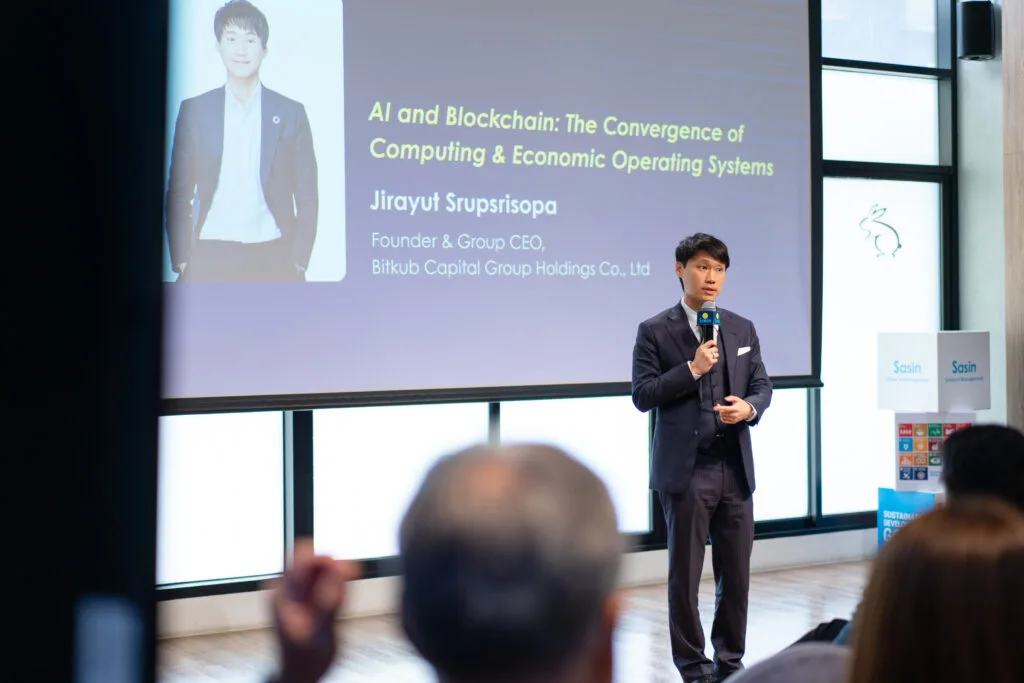
Founder and Group CEO, Bitkub Capital Group Holdings Co., Ltd.
Mr. Jirayut Srupsrisopa, Founder and Group CEO of —Thailand’s largest blockchain and digital asset business—stated that in the future, everything that can be tokenized will be tokenized. Financial services will operate in decentralized systems and become more widely accessible to the public.
The role of AI will shift from being merely a “tool” to becoming “agents” capable of making decisions and executing transactions independently. The volume of transactions conducted by AI agents is expected to grow rapidly and may soon surpass those conducted by humans.
Jirayut further explained that AI can be seen as a “computing operating system,” while blockchain functions as an “economic operating system.” Together, they will enable instant, borderless value exchange without intermediaries, creating structural changes in the global economy.
At the same time, Industry 4.0 technologies—such as humanoid robots, 3D printing, and the Internet of Things (IoT)—will operate within a unified ecosystem, with blockchain serving as the connective layer. This integration will significantly reduce production costs and increase efficiency to an unprecedented degree.
“Technologies emerging from the Fourth Industrial Revolution will reinforce one another to unlock new capabilities and potential over the next five years.”
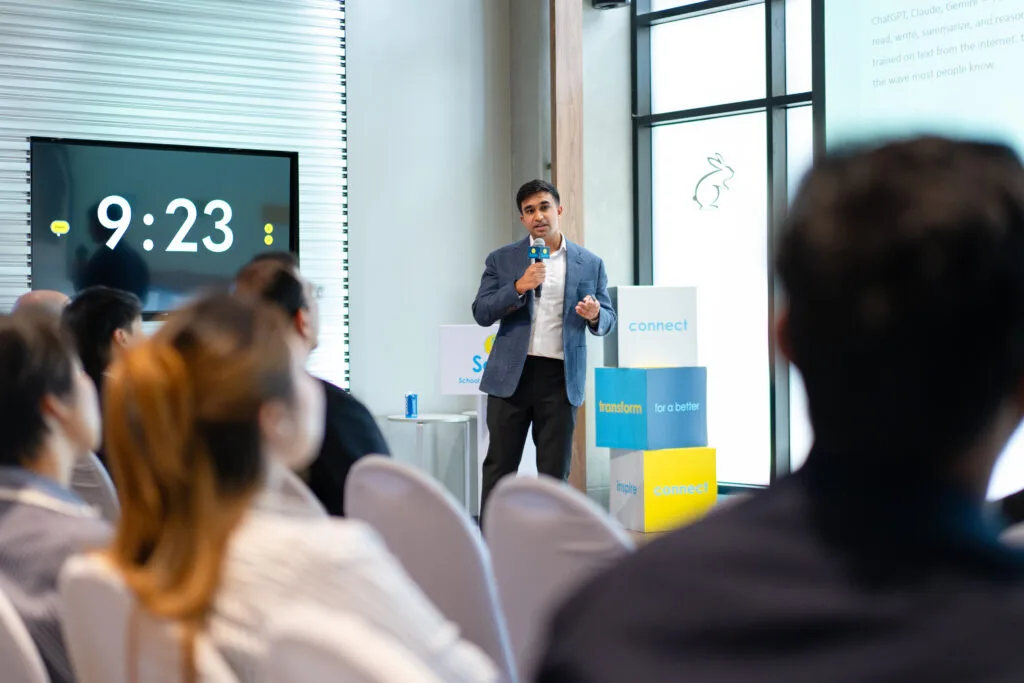
Sahdev Phawa, Vice President of , a company specializing in robotics and vision-language models, highlighted another major shift: AI is rapidly moving from the digital realm into the physical world through vision-language technologies, advancing toward high-level understanding of images and video.
He noted that a key turning point in the robotics industry is the transfer of AI “brains” into hardware, enabling robots to perform a wider range of tasks beyond pre-programmed functions.
“The transition from text-based AI to AI that can operate in the real world will be the most significant transformation in the industry,” he said, predicting that this shift will become clearly visible within the next 2–3 years.
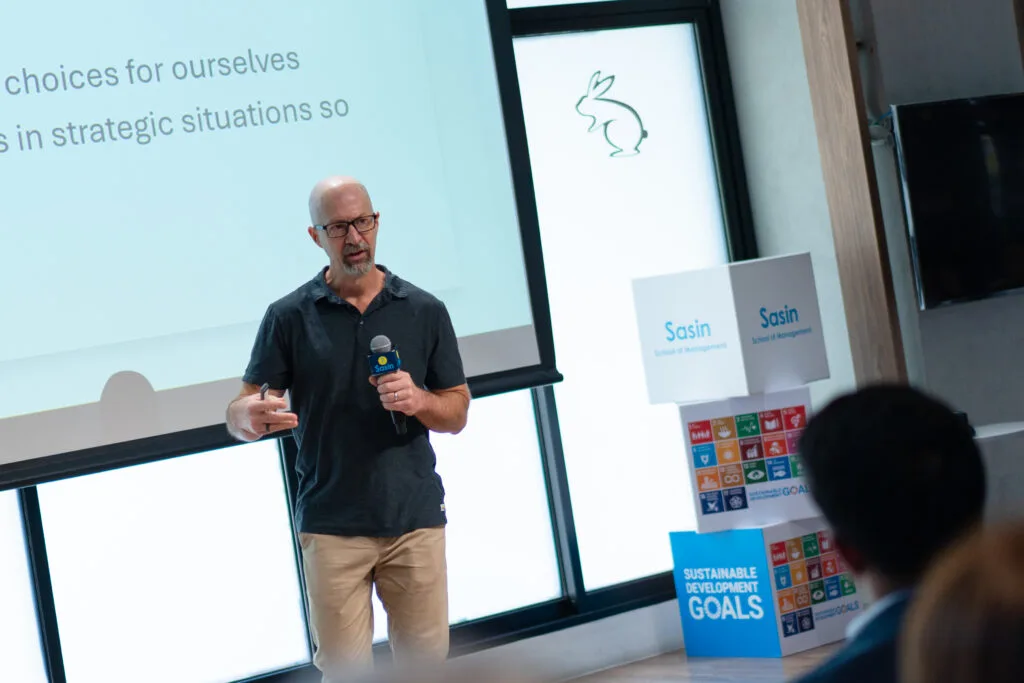
??? Kellogg School of Management
Dr. Brett A. Saraniti, Clinical Professor of Managerial Economics and Decision Sciences at , explained “Game Theory” as a tool for strategic decision-making. This concept uses mathematical models to predict competitors’ behavior and determine optimal strategies in complex situations.
In business, game theory is applied to strategy development—especially in innovation-driven competition, where timing and strategic choices are critical to success. Dr. Brett also discussed “Evolutionary Game Theory,” which helps explain how markets adopt new technologies—from early stages of building a user base to later phases where platforms compete to expand their influence.
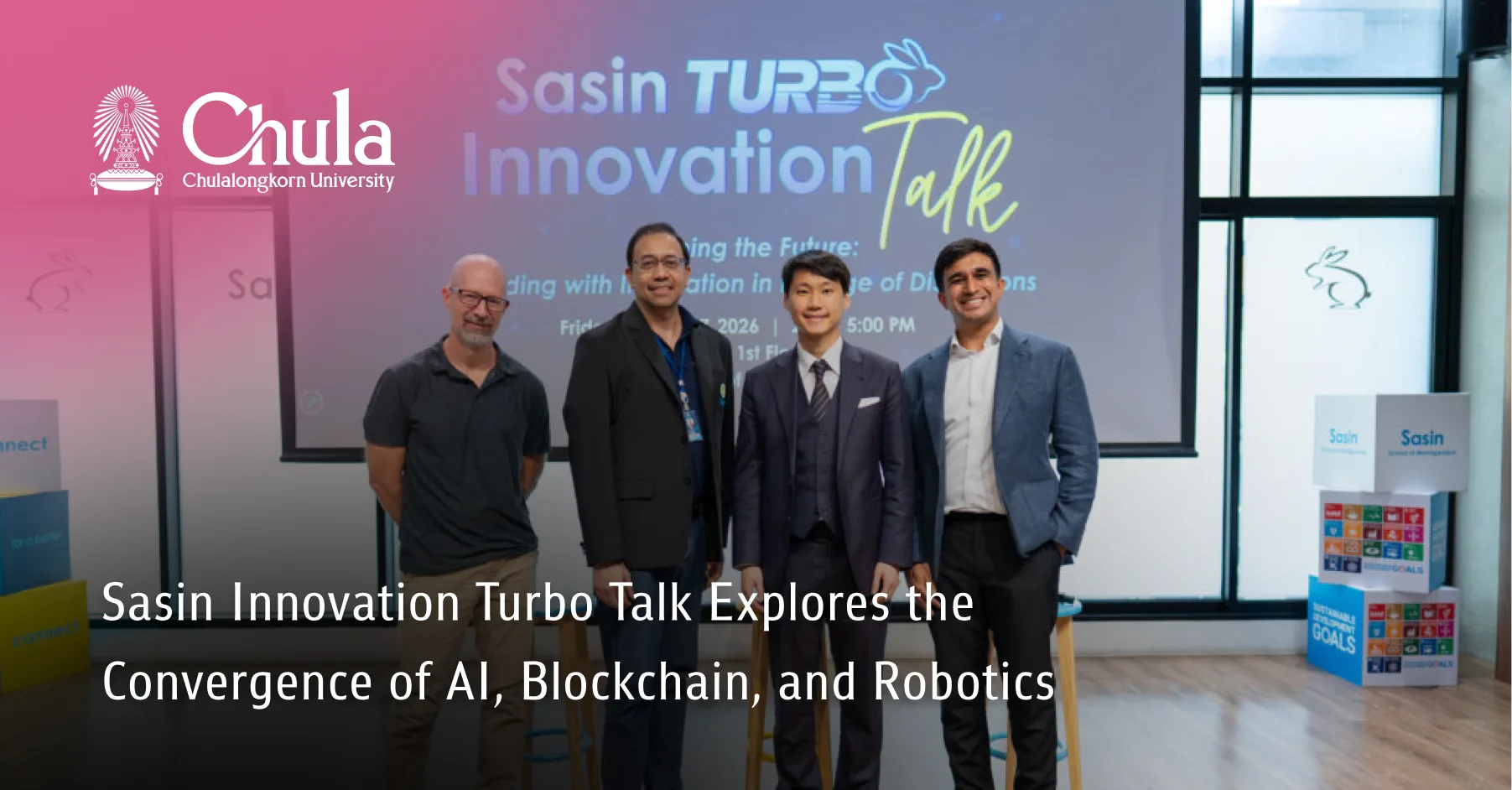
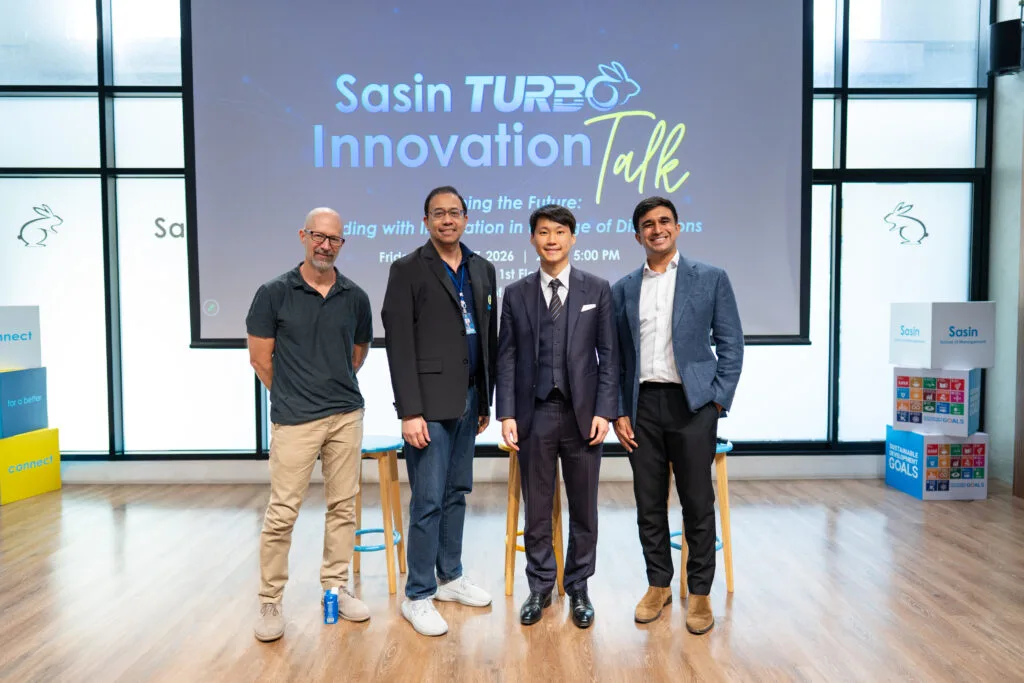
These perspectives were shared at the Sasin Innovation Turbo Talk, a forum for exchanging ideas on innovation, growth, and leadership—key factors shaping the future of business in the modern world. The event was organized by the of 麻豆国产 on March 27, 2026, and moderated by Associate Professor Dr. Piyachart Phiromswad, Deputy Director and faculty member at Sasin.
For Thailand, the key issue is not merely “keeping up” with technology but strategically positioning itself within the transforming global economic system—through digital infrastructure, innovation-friendly regulatory frameworks, and workforce development aligned with emerging technologies.