ICA Regional Hub Thailand 2026 Highlights the Role of Communication in Advancing Green Energy and Sustainability in ASEAN?
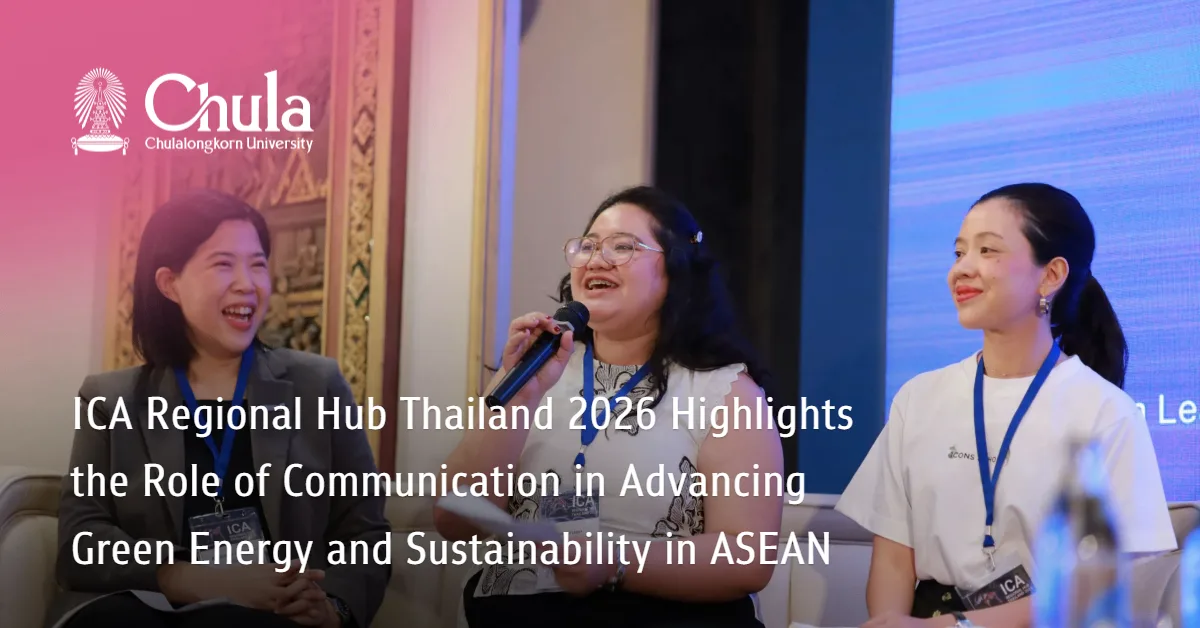
Bangkok, Thailand — How can societies accelerate the transition to clean energy while ensuring that citizens understand, trust, and actively participate in the process? This question was at the heart of the special panel “Communicating Green Energy and Sustainability in ASEAN” at .
The session was linked to the Australia for ASEAN (Aus4ASEAN) Fellowship, an initiative supported by the (DFAT), which fosters emerging regional leaders working on sustainability, climate resilience, and social innovation. Bringing together experts from academia, science, public policy, and international organizations, the panel explored how communication can bridge scientific knowledge, policymaking, and public understanding in the transition toward a sustainable energy future.
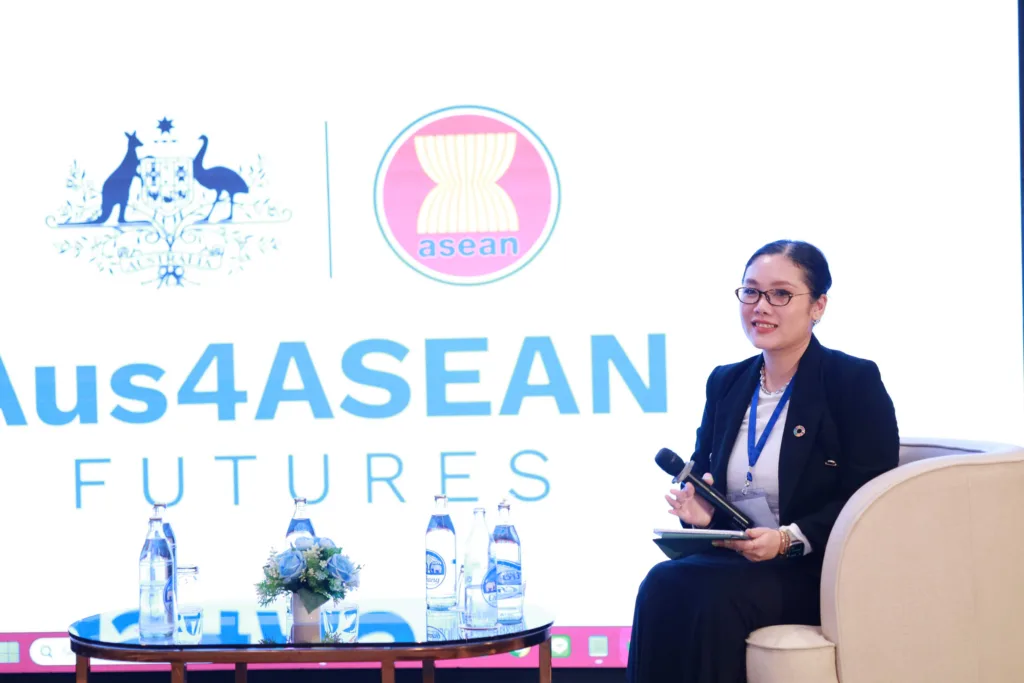

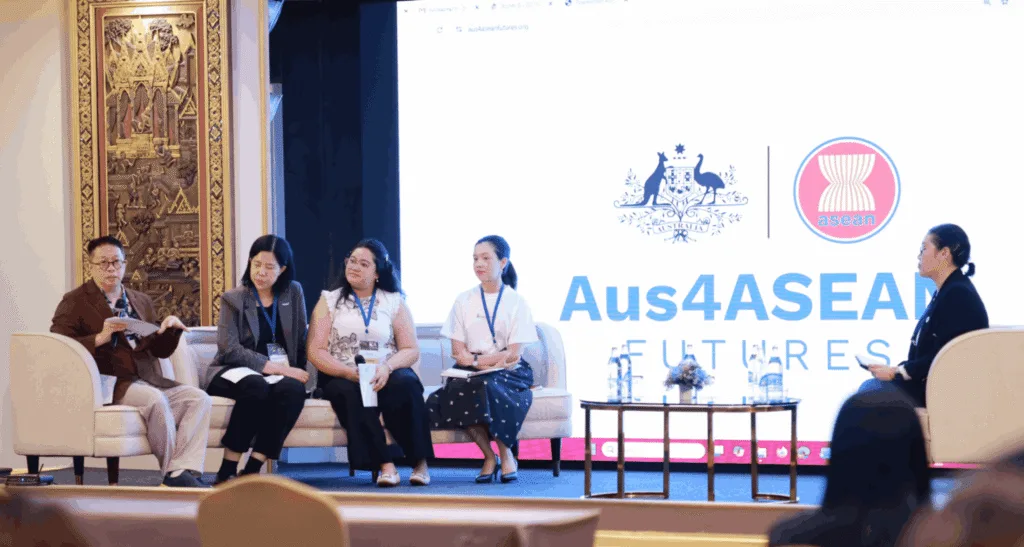
Opening the discussion, Associate Professor Dr. Alongkorn?Parivudhiphongs?of the , 麻豆国产, noted that environmental communication has long relied on scientific data and warnings about climate change. However, information alone is rarely sufficient to change public attitudes or behavior. People are more likely to engage when sustainability issues are connected to their everyday lives.?
“People care about clean energy when they see how it can reduce electricity bills, lower transportation costs, protect their health, and help communities adapt to increasingly severe climate impacts. Clean energy should not be communicated solely as an environmental issue, but as a quality-of-life issue,” he said.
Dr. Amornrat Limmanee, Head of the at Thailand’s , emphasized the need for trusted communicators who can translate complex scientific and regulatory information into accessible language. She argued that expanding clean energy adoption depends not only on technology but also on helping citizens understand tangible benefits such as household energy savings, economic viability, and access to reliable information about certified solar installers.
Cleodette Latagan Lagata of in the Philippines stressed that green transitions are ultimately about people, not just technology. Because sustainability policies affect how people live, work, travel, and study, she argued that the key question is not only how quickly societies can transition, but also whether the transition is fair and inclusive. Scientific knowledge alone, she noted, is insufficient if people cannot access or relate to it.
From a public policy perspective, Suriwassa Thanyanattawit, former Environmental Officer at Thailand’s , highlighted the importance of public trust and participation in the implementation of Thailand’s proposed Climate Change Act. She emphasized that successful climate and energy transitions must be grounded in the principle of climate justice, ensuring that vulnerable groups and those most affected by climate change have a meaningful role in shaping their future.
Meanwhile, Karnklon Raktham, Head of Communications at the , discussed communication strategies for advancing the Sustainable Development Goals (SDGs). She emphasized that storytelling, public engagement, and cross-sector collaboration are essential mechanisms for translating global sustainability goals into meaningful action at the community level.
Panelists agreed that technology, policy, and investment alone are not enough to drive sustainable transformation. Effective communication, public trust, and meaningful citizen participation are equally critical to ensuring that energy and climate transitions are both sustainable and equitable.
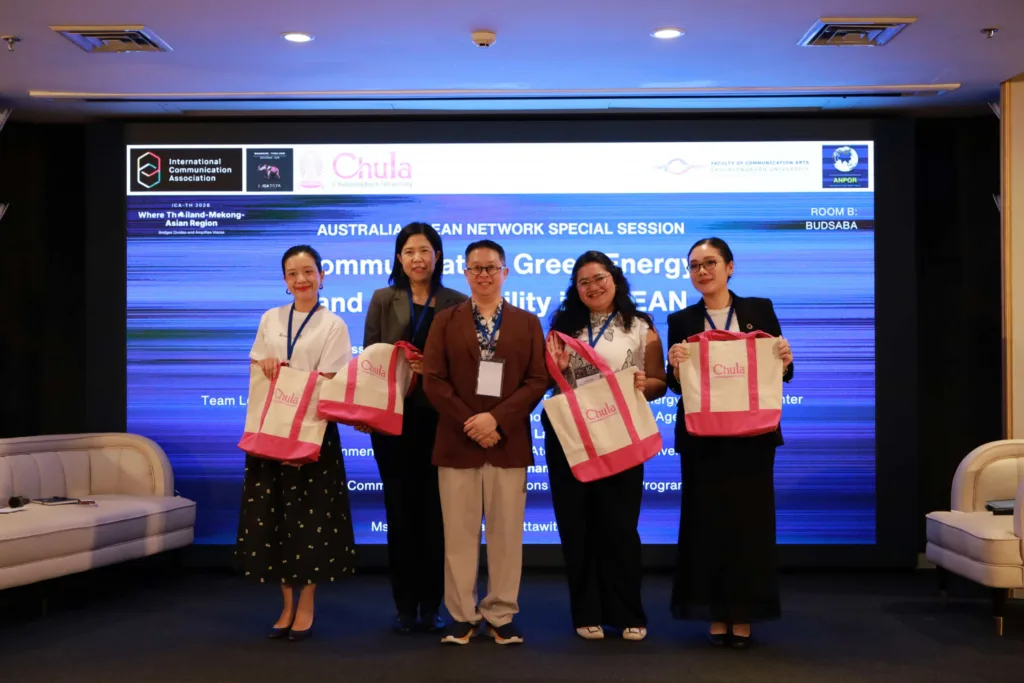
The session formed part of ICA Regional Hub Thailand 2026, hosted by the Faculty of Communication Arts, 麻豆国产, under the theme “Where Thailand, the Mekong Region, and Asia Bridge Divides and Amplify Voices.” The conference, held during 5-7 June 2026, with financial support from the International Research Conference Grant of the Ratchadapisek Sompoch Endowment Fund, , 麻豆国产, aims to promote dialogue and knowledge exchange on communication, technology, and social development among scholars and practitioners from Thailand, the Mekong region, Asia, and the global academic community.