Chula’s?CUSAT Team Achieves Global Space Milestone, Prepares to Launch CUSAT-1 Satellite in 2028?
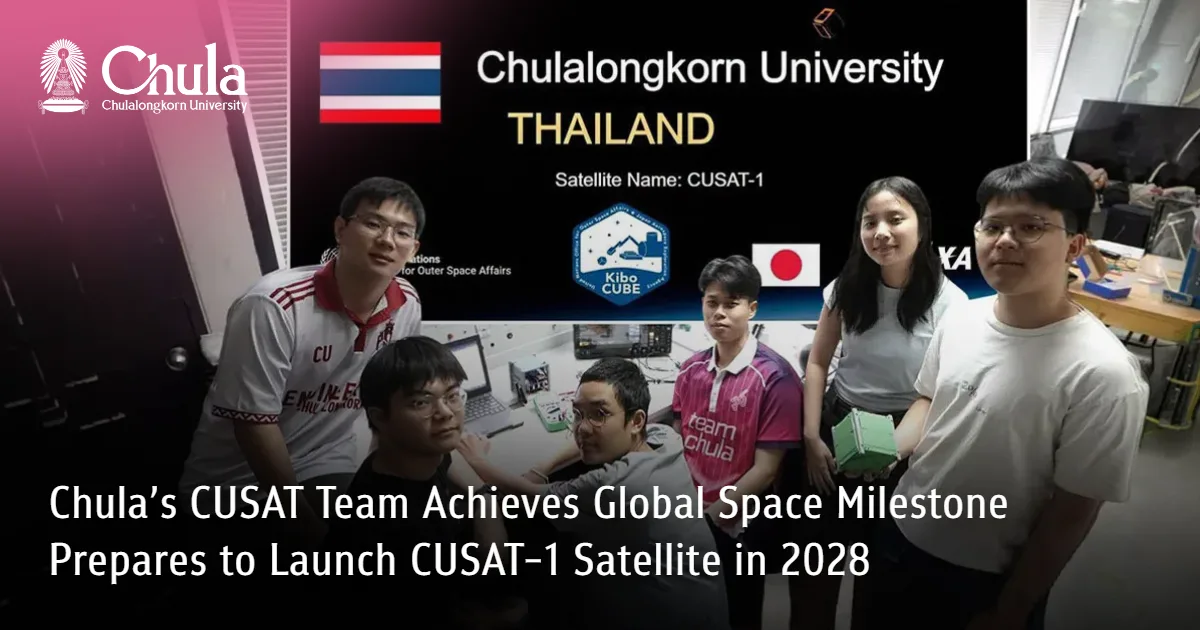
Students from(CUSAT) have made history by winning the 9th KiboCUBE Programme, a joint initiative by the and the . The official announcement was made on June 10, 2026, in Vienna, Austria, during the COPUOS 2026 Side Event. The team will now move forward with developing the CUSAT-1 satellite, scheduled for launch into space in 2028.

Winning the 9th KiboCUBE Programme
CUSAT was established in June 2025 by just five engineering students from 麻豆国产 who had previously won the School Satellite 2024 competition organized by Thailand’s .


CUSAT President Nuttawut Khumjaidee explained that the project originated from frustration with domestic satellite competitions, which focused only on concept presentations without offering the opportunity to launch an actual satellite. The team therefore sought an international competition capable of turning their dream into reality. Winners of the KiboCUBE Program receive support for launching their satellite into space.
The team began preparing its proposal in June 2025, competing against applicants from more than 20 countries. They advanced to the final three teams before ultimately being selected as the winner.
Turning Childhood Dreams into Reality
Many club members have been fascinated by space since childhood. While many people believe space exploration is beyond the reach of Thai students, the team refused to accept that assumption.
Vice President Natthawat Samakkeetham said that the dream of building satellites became achievable once he entered 麻豆国产 and joined CUSAT. Team member Thee Mahasang joined simply because a friend invited him, despite having little prior interest in space. After participating in the project, however, he found it far more enjoyable than he had expected.
A Multidisciplinary Student Team
CUSAT-1 is being developed by students from a wide range of disciplines, including:
- Electrical Engineering
- Mechanical Engineering
- Computer Engineering
- Industrial Engineering
- Environmental Engineering
- Law
The international competition required a mission addressing not only engineering but also environmental and policy considerations. The team also includes two students from King Mongkut’s University of Technology Thonburi (KMUTT), creating a cross-university collaboration that broadened the project’s expertise.
Overcoming Major Challenges
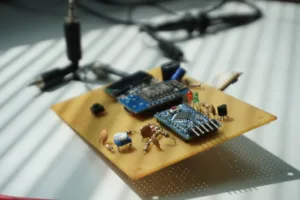
Developing the project was far from easy. Natthawat explained that the biggest obstacle during the early concept design stage was recruiting members. Since the work consisted entirely of documentation rather than hands-on hardware development, it was difficult to attract volunteers, particularly during university breaks.
Natthawat added that only 10 core members were responsible for producing more than 100 pages of technical documentation.
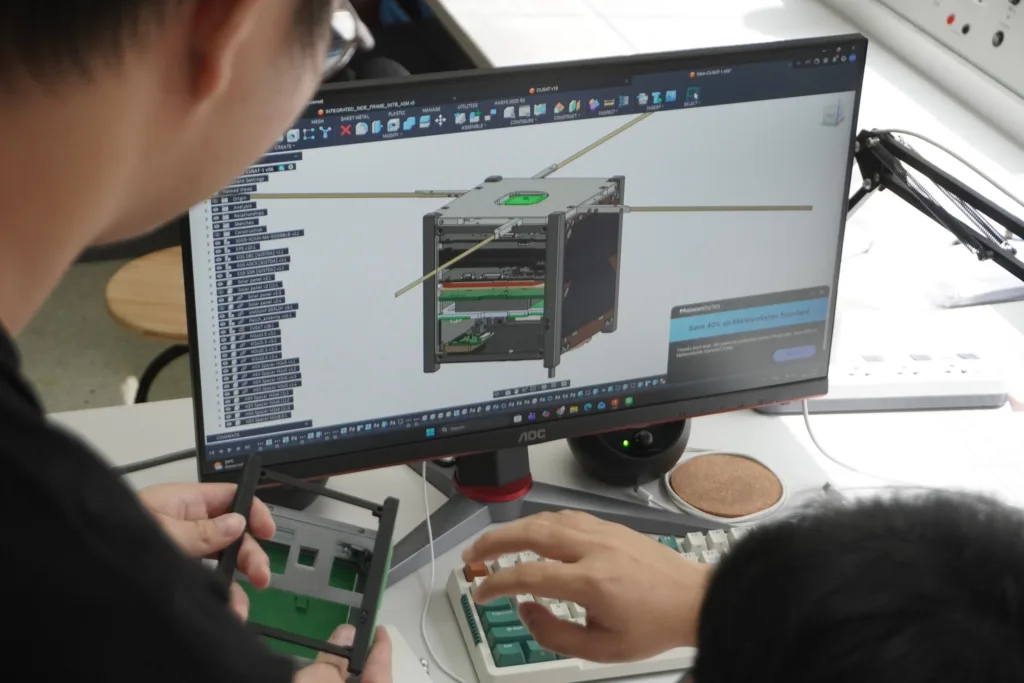
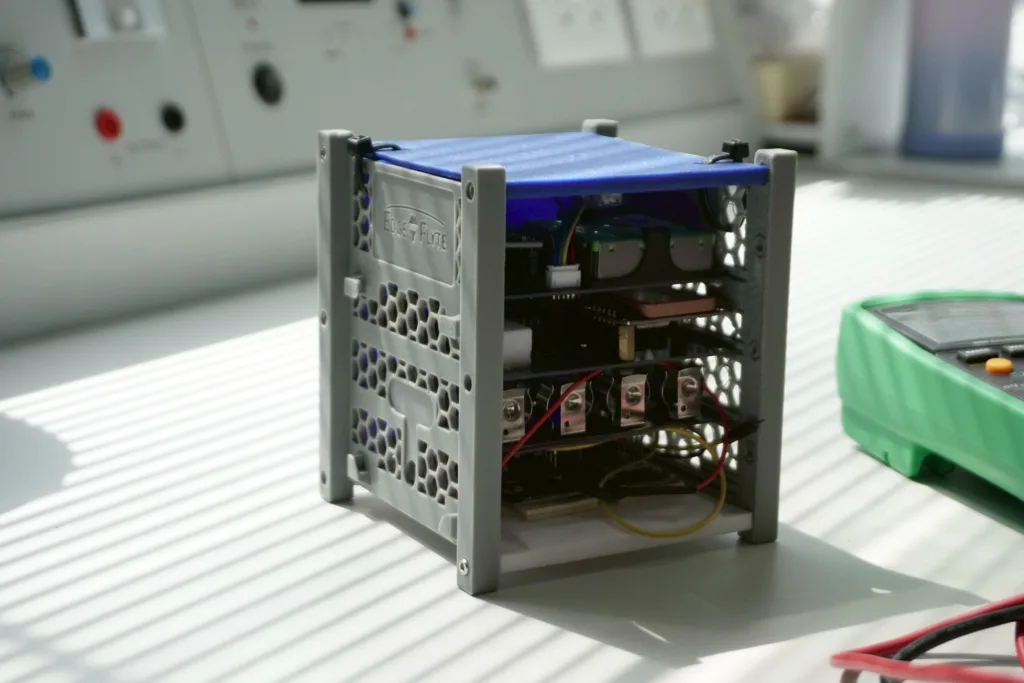
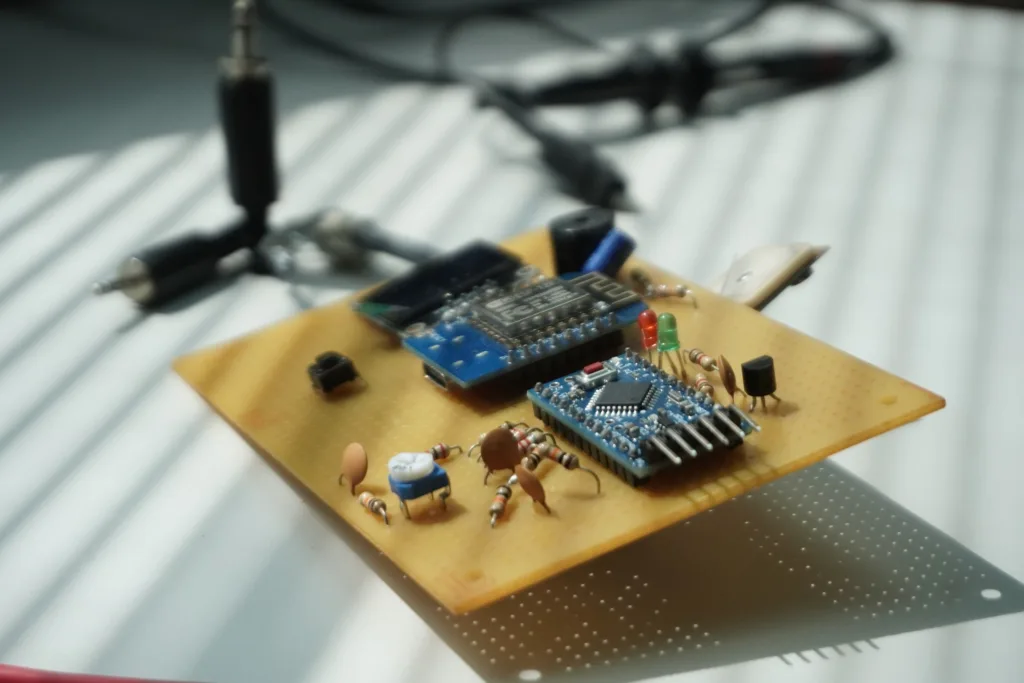
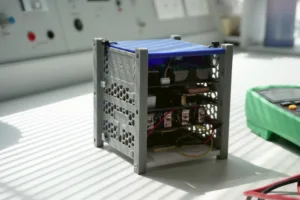
Engineering challenges were equally demanding. CUSAT-1 is a 1U CubeSat, measuring only 10 × 10 × 10 centimeters, requiring every component to fit precisely within an extremely limited space.
Thee, who was still a first-year student while working on the project, said the greatest challenge was acquiring highly specialized aerospace engineering knowledge and designing the satellite to satisfy multiple layers of safety standards required for spaceflight.

Learning Beyond the Classroom
Despite numerous challenges, each member expanded their knowledge well beyond what was taught in class.
Natthawat, who leads the satellite communications system, explained that he had to master electromagnetic wave theory for signal transmission and processing before these subjects were even offered in the university curriculum. He relied on strong mathematical foundations, previous experience from Thailand’s Science Olympiad training program, and extensive self-study.
Designing for Space
Vice President Korn Srivarakul, who designed the satellite’s structure, explained that selecting materials for space applications is far more complex than for terrestrial engineering. Engineers must consider structural strength, heat dissipation, and the ability to withstand extreme environmental conditions.
He emphasized the project’s defining challenge: “We only get one chance to send the satellite into space. There is no opportunity to go back and repair it.” Therefore, every design decision must be corrected from the outset.
Why CUSAT Was Selected
Natthawat believes safety was the team’s greatest strength.
CUSAT-1 will be deployed from the through JAXA’s J-SSOD deployment system, where strict safety standards are paramount. The team benefited from advice provided by senior students experienced in satellite design, helping them meet these rigorous requirements.
Natthawat added that their design documentation comprehensively addressed all required standards, including the safety of both the deployment system and astronauts aboard the ISS.
Another distinguishing factor was the team’s age. While KiboCUBE has been running for nine years, CUSAT’s satellite was designed primarily by second- and third-year undergraduate students, making the achievement particularly remarkable.

Student-Led Development
The project is supervised by:
- Dr. Natthakorn Kasamsumran,
- Assistant Professor Dr. Pawan Piromthong,
The advisors mainly assisted with university coordination and final reviews. The satellite design itself has been carried out entirely by the students.
GISTDA has also supported the project by providing laboratory facilities, equipment, and consultations with professional satellite engineers regarding technical standards.
More Than Engineering
Beyond technical knowledge, Nattawat said the most valuable outcome has been learning teamwork.
The project required clearly defined responsibilities and close collaboration among students from different departments and faculties, providing invaluable experience in interdisciplinary cooperation.
The Road to Launch
Between now and early 2028, the team will continue developing and assembling CUSAT-1 before delivering it to JAXA for approximately three months of safety and standards verification prior to launch.
The satellite’s primary mission will be to:
- Capture Earth imagery for monitoring water resources in agricultural areas.
- Monitor regions vulnerable to flooding.
- Detect agricultural burning to help track air pollution.
Although CUSAT-1’s camera will not match the resolution of GISTDA’s THEOS-1 or THEOS-2 satellites, its key advantage lies in its more frequent passes over Thailand, allowing near-daily monitoring—particularly valuable during emergencies such as floods.
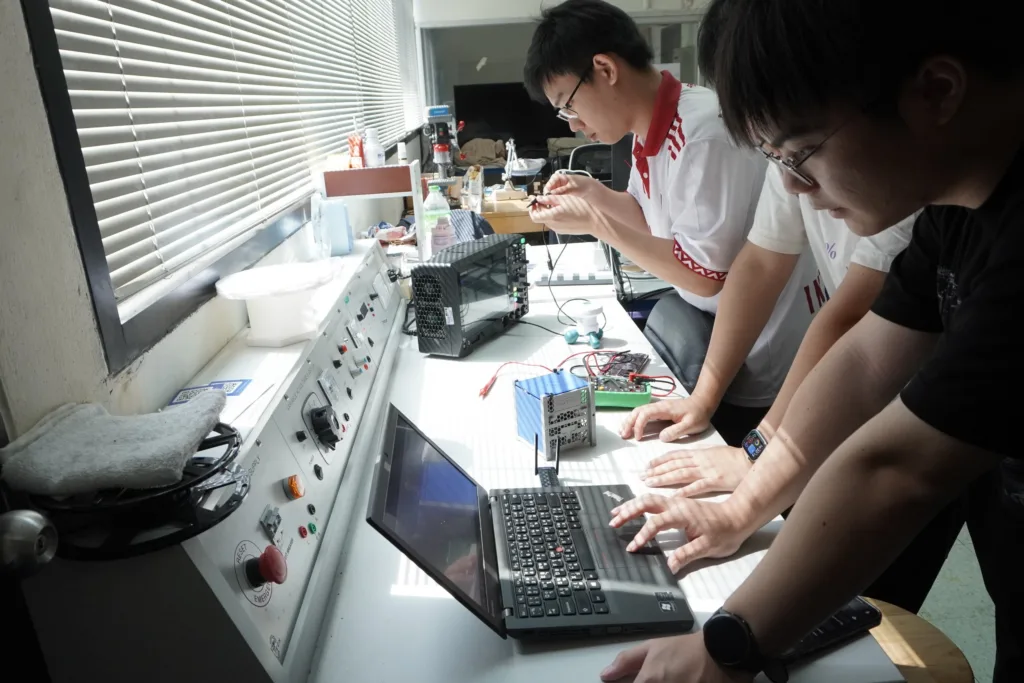
Another significant achievement is that several components of CUSAT-1 were developed domestically by the club, laying an important foundation for reducing Thailand’s future dependence on imported space technology.
Surpassing Expectations
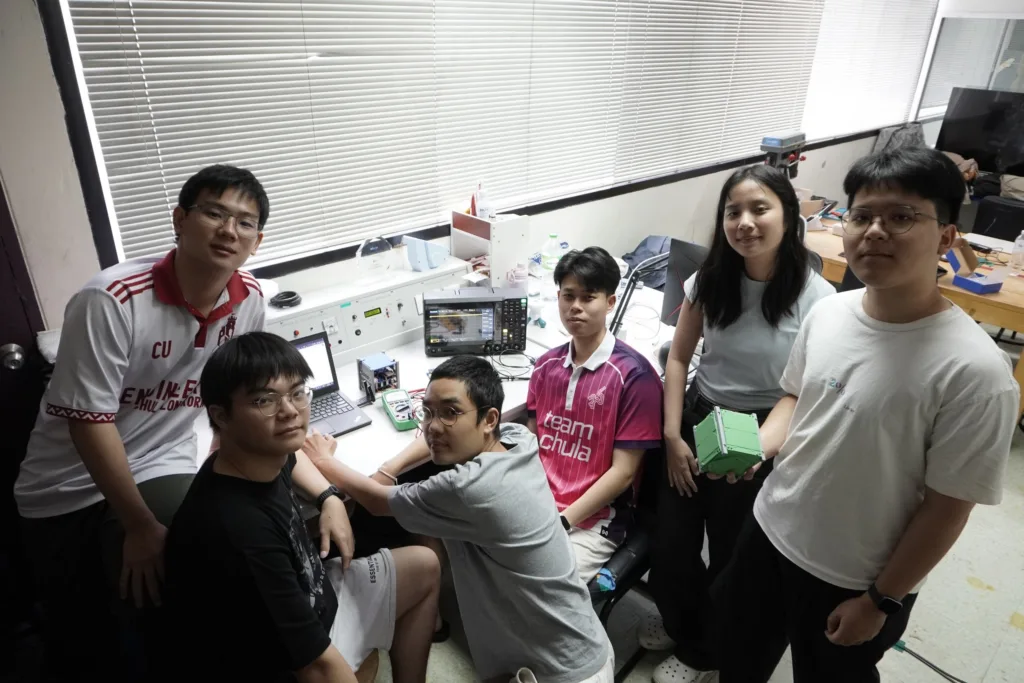
Natthawat reflected: “We never expected to win because, at that stage, everything existed only on paper. There was nothing tangible yet. But we decided to give it our absolute best because if we didn’t try, we’d never know whether we could succeed. The outcome exceeded all of our expectations.”
Inspiring the Next Generation
The team’s success also demonstrates the capabilities of young Thai engineers on the international arena.
Thee said that he once believed working in space required completing an undergraduate degree—or even pursuing graduate studies abroad. Now, he sees that barrier disappearing, as first- and second-year students have already proven they can accomplish such work. Some contributors to the project were still in high school.
The CUSAT team concluded with an encouraging message: “We don’t want people to think space is too far beyond their reach. Winning this competition proves that Thai youth can succeed in space technology. You don’t have to wait until after graduation. We’ve already shown it’s possible. If you’re interested, just give it a try—it is well within the abilities of Thailand’s young people.”